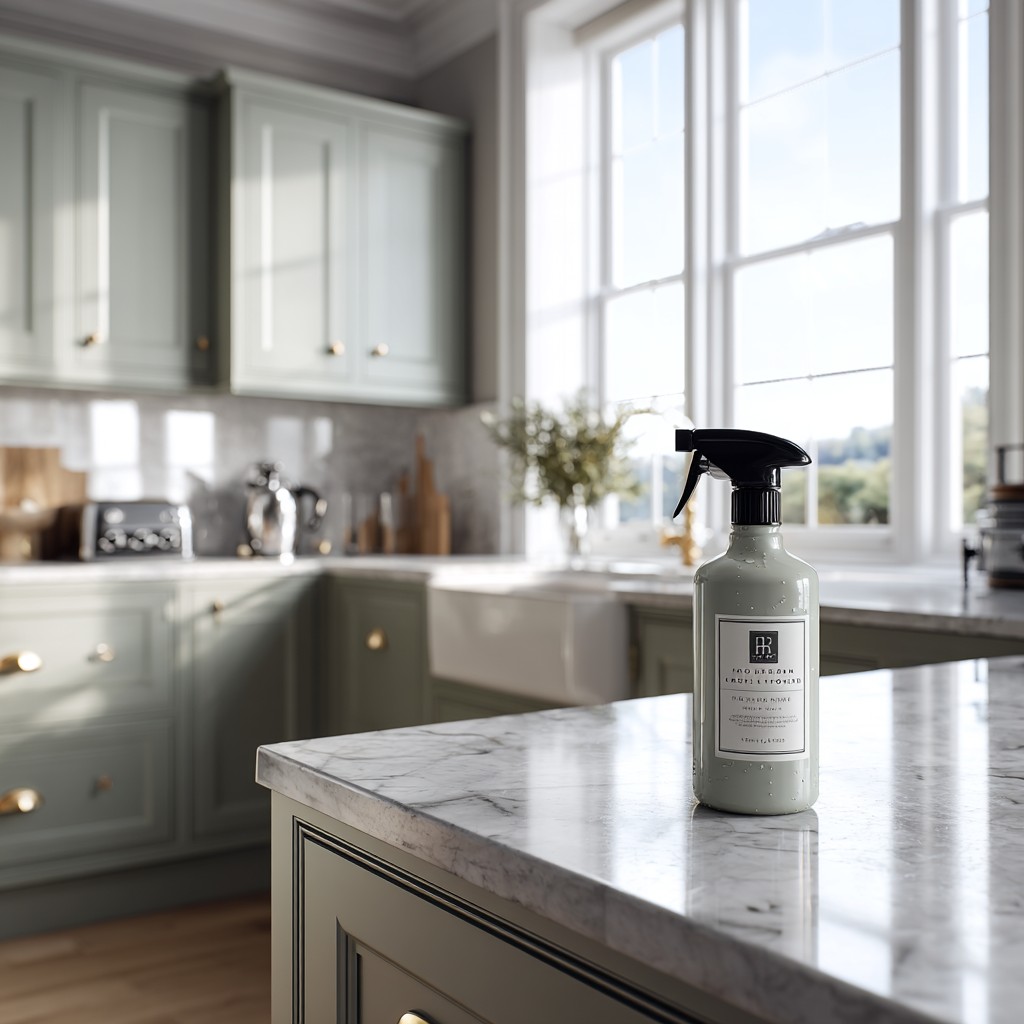
Marble and natural stone surfaces in rental properties occupy a peculiar position in the cleaning world: they are simultaneously the most beautiful and the most unforgiving thing a tenant will encounter on checkout day. They look extraordinary in a listing. They photograph brilliantly. And they have the chemical temperament of a Victorian aristocrat who has been handed the wrong fork – visibly, permanently, expensively offended by the slightest impropriety.
That impropriety, in almost every case, comes down to the cleaning product used on them. Grab the wrong bottle from under the sink – a limescale remover, a bathroom spray, something with a cheerful lemon graphic on the front – and you will not clean the marble so much as begin a slow, irreversible conversation with it about calcium carbonate dissolution. The result is etching: a dull, cloudy mark baked into the surface that no amount of subsequent cleaning will fix, because it is not dirt. It is damage. And at the end of a tenancy, that distinction matters enormously.
Understanding pH-neutral cleaning agents is not chemistry homework. It is, in practical terms, the difference between handing back a property with gleaming stone worktops and handing back one where the landlord is already on the phone to a stone restoration specialist. Let’s cover it properly.
A Brief Chemistry Lesson (Without the Trauma)
The pH Scale and Why Stone Cares About It Deeply
The pH scale runs from zero to fourteen, with seven sitting in the middle as neutral. Anything below seven is acidic – lemon juice, vinegar, most bathroom cleaners, virtually anything marketed as a limescale remover. Anything above seven is alkaline – bleach, ammonia, oven cleaners, many general-purpose degreasers. Both ends of the scale are highly effective at cleaning certain surfaces. Neither end has any business going near natural stone.
Marble, limestone, and travertine are composed primarily of calcium carbonate – the same mineral that forms limescale, as it happens, which is one of nature’s more ironic arrangements. Calcium carbonate reacts with acid immediately and visibly. Apply an acidic cleaner to a marble surface and you are, chemically speaking, partially dissolving it. The reaction leaves behind etching: a matte, slightly rough patch where the polished surface used to be. It happens fast. It happens with products you would never suspect. And it cannot be cleaned away, because, again – it is not a stain. It is a change in the physical structure of the stone.
Alkaline cleaners present a different but equally real problem. Strong alkalis strip the surface of any sealant applied to protect the stone, and over time they break down the stone itself. Gentler alkaline products cause less immediate drama but accumulate damage with repeated use in a way that only becomes apparent when someone looks closely during an inventory inspection.
pH-neutral products – those sitting at or very close to seven on the scale – clean effectively without triggering either reaction. For natural stone, they are not a premium option or a specialist preference. They are the only appropriate choice.
Know Your Stone: Marble, Granite, Limestone, and Travertine
Why “Natural Stone” Covers a Very Wide Spectrum of Sensitivity
London rental properties – particularly the conversions and high-end refurbishments that have driven the market over the past two decades – tend to feature natural stone in a handful of recurring configurations: marble bathroom floors and walls, granite kitchen worktops, limestone flooring in hallways, travertine tiles in wet rooms and bathrooms. They look related. Their cleaning requirements are not identical.
Marble is the most reactive and the least forgiving. Its polished surface is easily etched by acid and easily scratched by abrasive cleaning tools. It is also porous when unsealed, which means spills left to sit will stain as well as etch. If a rental property has marble anywhere, treat every product that approaches it with deep suspicion until you have confirmed its pH.
Granite is considerably more resilient – denser, harder, less porous, and less reactive to mild acids. A granite worktop will survive the occasional lemon juice splash without drama. It still benefits from pH-neutral cleaning, and it still dislikes strong acids and alkalis, but it forgives minor transgressions more readily than marble does. Think of granite as the more relaxed sibling.
Limestone and travertine sit closer to marble on the sensitivity spectrum. Both are calcium carbonate-based, both react badly to acid, and travertine has the additional complication of its naturally pitted surface – those characteristic small holes and channels that look beautiful but trap cleaning product residue if anything too viscous is used. A pH-neutral cleaner and a soft cloth, worked gently and rinsed clean, is the right approach for both.
The Products: What to Use, What to Avoid, and What to Evict From Your Cleaning Kit
Reading a Label Before It’s Too Late
A pH-neutral cleaning product will usually say so on the label, though it may take a moment of hunting through the small print to find it. Phrases to look for include “pH neutral”, “safe for natural stone”, “suitable for marble and granite”, or a pH value listed between 6.5 and 7.5. Several reputable brands produce stone-specific cleaners – Lithofin, HG, and Fila are well-regarded in professional circles and widely available. They are not expensive relative to the cost of stone restoration.
The products to remove from the stone surfaces’ vicinity immediately are the ones that most bathrooms and kitchens contain as standard. Cillit Bang – specifically the limescale and shine variant – is essentially acid in a spray bottle and will etch marble on first contact. Flash bathroom spray, Dettol bathroom cleaner, most vinegar-based products, and anything with a citrus active ingredient all sit in the acidic range. Bleach-based cleaners, including many mould and mildew sprays, are on the alkaline end and equally unwelcome. Even some products labelled as “gentle” or “natural” use citric acid as the active ingredient, which is still acid regardless of how wholesome the branding looks.
The presence of a lemon on a cleaning product’s label should, when you are standing in front of a marble floor, function as a warning sign rather than a reassurance.
The Household Staples That Are Secretly the Enemy
Beyond the branded products, several common household cleaning agents are regular culprits in stone damage. White vinegar – beloved of budget cleaning guides everywhere and genuinely useful on many surfaces – is around pH 2.5, which makes it catastrophically bad for marble. Bicarbonate of soda sits on the mildly alkaline side and is abrasive enough to scratch a polished surface. Washing-up liquid, which many people reach for as a mild all-purpose option, is usually mildly alkaline and fine for occasional, well-diluted use on sealed stone, but is not a long-term maintenance solution. For marble and limestone specifically, a purpose-made pH-neutral stone cleaner is the only sensible daily option.
Practical Technique: Cleaning Stone Surfaces Without Causing a Diplomatic Incident
Day-to-Day Maintenance Done Right
The good news is that once you have the right product, cleaning natural stone is not complicated. Spray or apply a small amount of pH-neutral cleaner to the surface – never pour directly, and never allow pooling liquid to sit. Wipe with a soft microfibre cloth in gentle, overlapping strokes. Rinse with clean water, or wipe with a second damp cloth. Dry the surface promptly with a clean, dry cloth. That is the entire process.
The drying step is the one most commonly skipped, and it matters more than it seems. Water – particularly London’s hard water, which carries significant calcium content – leaves mineral deposits on stone surfaces if allowed to dry naturally. These appear as white, hazy marks that are distinct from etching but equally visible on a polished surface. They can be removed with a pH-neutral cleaner and some effort, but preventing them with a quick dry-off takes fifteen seconds.
Dealing With Stains Without Reaching for Something Acidic
The instinctive response to a stain on a stone surface – particularly a dark stain on pale marble – is to reach for something strong. This is the instinct to override. Most stains on natural stone respond to a poultice: a paste made from an absorbent material mixed with a cleaning agent appropriate to the stain type, applied to the stain, covered with cling film, and left for twelve to twenty-four hours to draw the stain out. Bicarbonate of soda mixed with water works for oil-based stains. Hydrogen peroxide at a low concentration works for organic stains like coffee or wine on light stone. Neither of these will touch an etch mark, but for genuine staining in a porous or unsealed surface, they are the right approach.
The End of Tenancy Stakes: Etching, Wear, and the Line in Between
What Inventory Clerks Know and How Adjudicators Think
At the end of a tenancy, the condition of natural stone surfaces is assessed against the check-in inventory, with the standard fair wear and tear allowance applied. What that means in practice is that minor surface wear – the very slight dulling that occurs with years of correct cleaning and normal use – will generally be treated as acceptable. Etching is a different matter.
An etch mark on a marble bathroom floor or a limestone kitchen surface is not wear. It is damage caused by the use of an incorrect cleaning product, and an adjudicator will view it accordingly. The challenge for tenants is that etching is sometimes hard to distinguish from general surface wear without specialist knowledge, and inventory clerks vary in their familiarity with stone surfaces. A landlord who has paid for marble installation and understands its value will almost certainly know the difference and will have documented the surface condition at check-in accordingly.
The practical implication is straightforward: use the right products throughout the tenancy, not just in the weeks before checkout. Etching that has developed over two years of lemon-scented bathroom spray cannot be addressed by switching to pH-neutral cleaner in the final fortnight. The mark is already there.
When It’s Beyond Cleaning: Sealing, Honing, and Professional Restoration
A final note on the limits of what cleaning can achieve. Natural stone in rental properties should be sealed – either by the landlord before letting or periodically during the tenancy – and sealant wears down over time with regular cleaning, regardless of how correct that cleaning is. A surface that was sealed at check-in but has had two years of daily use may have diminished protection by checkout, which makes it more vulnerable to staining in the final weeks.
If a stone surface has been etched, the only remedy is mechanical – honing or polishing by a stone restoration specialist to remove the damaged layer and restore the finish. This is not a cleaning job, and no cleaning product will make it one. Knowing that distinction – between what a cloth and a pH-neutral cleaner can address and what requires a professional with diamond-pad equipment – is part of approaching natural stone with appropriate respect.
Which, when all is said and done, is exactly what these surfaces demand. Treat them correctly, use the right products, dry them promptly, and they will look extraordinary for the duration of the tenancy. Use the wrong cleaner once and they will remember it indefinitely. As temperaments go, it is not entirely unreasonable. It just requires knowing the rules before you start.
