Renting a property with a loft conversion or a rear extension feels like a win. More space, more light, possibly a roof terrace if the landlord was feeling particularly ambitious at planning stage. What the listing rarely mentions – and what tends to become clear only at the very end of the tenancy – is that more space means more cleaning obligations, and that those obligations come with their own set of complications that standard end of tenancy guidance simply doesn’t cover.
Loft conversions and extensions are not just extra rooms. They are architecturally distinct spaces with surfaces, fittings, and access challenges that differ significantly from the rest of the property, and inventory clerks know it. Understanding exactly what you’re on the hook for before you start cleaning is the difference between a methodical checkout process and a panicked last-minute scramble around a Velux window with a stepladder and a damp cloth.
The Contractual Picture: More Floor Space, More Responsibility
What Your Tenancy Agreement Actually Says (Probably)
Most standard tenancy agreements require the property to be returned in the same condition it was let – clean, in good repair, and matching the check-in inventory. What they rarely do is distinguish between the original footprint of the house and anything that was added later. As far as the agreement is concerned, the loft room is a room, the garden room is a room, and the open-plan kitchen extension is part of the kitchen. All of it falls within scope.
Where it gets more nuanced is when an extension or conversion was added during the tenancy itself – a relatively unusual situation, but not unheard of in London, where landlords sometimes undertake works between lets or, occasionally, while a tenancy is running. In these cases, the check-in inventory should, in theory, have been updated to reflect the new space. If it wasn’t, the tenant is in a stronger position to argue about the applicable standard, because no agreed baseline exists for that area. Document everything in writing if this applies to you.
For the vast majority of tenants, however, the conversion or extension was there when they moved in, it appears in the check-in inventory, and it will be assessed against that inventory at checkout. The question is not whether it needs cleaning – it does – but how, and to what standard.
Loft Conversions: Where Dust Goes to Retire
Velux Windows, Exposed Beams, and the Particular Misery of High-Level Grime
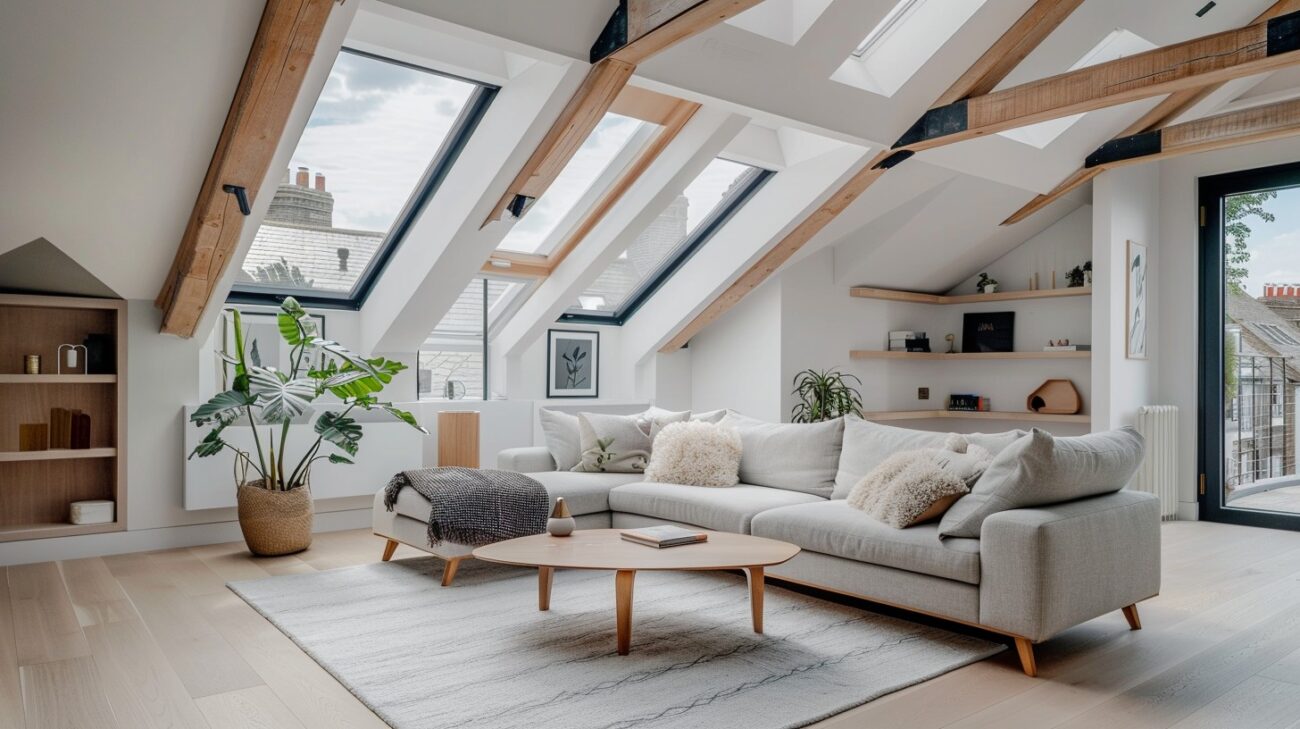
A well-executed loft conversion is a lovely thing. Sloped ceilings, exposed timbers if you’re lucky, natural light pouring in from roof windows – it has a certain Scandi-chic quality that photographs well and rents well. What it also has, if you look closely enough, is an extraordinary talent for accumulating dust in places that require genuine effort and occasionally a small act of courage to reach.
Velux and roof windows are the headline act here. The interior frame, the sill, the rubber seal around the glass, and – if the window tilts inward for cleaning – the exterior face that’s now temporarily on the inside: all of these need attention, and all of them will be checked. The hinge mechanism and the locking handle are contact points that collect grime in the same way a standard window latch does, but they’re harder to reach and easier to overlook. A barely damp microfibre cloth worked carefully around the frame is the right tool; anything wetter risks the timber surround if the conversion is more than a few years old.
Exposed beams and joists – the decorative kind, not structural ones hidden in plasterboard – are essentially long, horizontal dust shelves that run the length of the room at head height or above. They look wonderful. They are a cleaning project. Work along the grain with a dry microfibre cloth first to lift the loose layer, then follow with a very lightly damp cloth if there’s any residue. Never saturate timber in a loft room, where ventilation is often more limited than in the floors below.
Carpets Versus Hard Floors in Loft Rooms – A Tale of Two Surfaces
Loft rooms split fairly evenly between carpet and hard flooring, and the cleaning implications differ accordingly. Carpeted loft rooms tend to hold dust and debris more stubbornly than their counterparts on lower floors, partly because loft spaces have less air circulation and partly because they’re often used as bedrooms where shoes come off at the door and foot traffic is concentrated around the bed and wardrobe. A thorough vacuum – moving the bed if possible, getting into the corners where the slope meets the floor – is essential, and a professional clean may be expected if the check-in inventory specified one.
Hard floors in loft conversions come with their own quirk: the junction between the floorboards and the sloped plasterboard walls. This is a narrow, awkward gap that collects hair, dust, and general debris with quiet determination. A crevice tool gets into it; a standard floor mop does not. It takes five minutes and prevents what would otherwise be a fairly pointed comment on the checkout report.
Extensions: Bifold Doors, Roof Lanterns, and the Mud Problem
The Particular Cleaning Challenges of Indoor-Outdoor Living Spaces
The rear extension – specifically the open-plan kitchen-diner with bifold or sliding doors onto the garden – has become the defining architectural feature of the modernised London terrace. It is also responsible for a specific and predictable pattern of end of tenancy cleaning problems, because it sits at the intersection of indoor and outdoor, and that intersection is where mud, leaves, condensation, and general garden debris come to congregate.
Bifold door tracks are the first thing to address. Those aluminium channels at floor level collect an astonishing amount of grit, dead insects, and compacted debris – the kind that requires a stiff brush and a vacuum crevice tool rather than a mop. The door seals, the glass panels themselves (both sides, floor to ceiling), and the exterior frame where it meets the outside paving all need attention. Inventory clerks who cover properties with bifold doors know exactly where to look, because those tracks are the most consistently missed item in extension cleaning across the board.
Roof Lanterns, Skylights, and the High-Level Problem
A roof lantern over a kitchen extension is architecturally splendid and practically challenging in equal measure. The interior frame and glazing bars – those white or anthracite-grey structural elements between the glass panels – accumulate dust and condensation residue that builds into a visible film over the course of a tenancy. Reaching them requires a stepladder and a degree of commitment, but they are unambiguously part of the space and unambiguously included in the cleaning obligation.
The interior glass itself can usually be reached with an extendable window cleaning tool and a streak-free glass cleaner. The glazing bar surfaces respond to a damp microfibre cloth. What to avoid is any product that leaves a residue on the frame finish – matte anthracite powder-coat finishes, common on modern roof lanterns, show smears and product build-up very clearly.
Garden rooms and orangeries present similar challenges, with the addition of floor surfaces that are often porcelain tile or polished concrete – both of which show footprints, streaks, and dried water marks more readily than standard flooring. A pH-neutral cleaner and a flat mop used in overlapping strokes rather than a back-and-forth scrub is the approach that avoids leaving tide marks.
Utility Rooms and the Spaces That Fall Between the Cracks
The Room Everyone Treats as a Dumping Ground
Extensions in London frequently incorporate a utility room – that quietly heroic space where the washing machine lives, the coats accumulate, and the general overflow of domestic life ends up. It is also, with reliable consistency, the room that gets cleaned last, cleaned least, and noted first on the checkout report.
Utility rooms have specific problem areas: the washing machine filter and the rubber door seal, both of which collect lint, moisture, and occasionally mould; the floor behind and beside appliances; the skirting boards, which in utility rooms are almost never cleaned during a tenancy; and whatever surface is acting as a shelf above the machines, which will have absorbed a year’s worth of laundry powder dust and general residue.
Apply the same systematic approach here as anywhere else – top down, dry first then damp – and don’t treat it as a quick five-minute job on the morning of checkout. It rarely is.
Fair Wear and Tear in Non-Standard Spaces
How Adjudicators Think About Extended and Converted Properties
The principle of fair wear and tear applies to all parts of a rented property, including conversions and extensions, but it operates slightly differently in spaces that have non-standard surfaces and fittings. An adjudicator assessing a dispute over a loft conversion or extension will take into account the accessibility of the space, the nature of the surfaces involved, and whether the cleaning standard expected was reasonable given the tenancy length and the type of use.
What this means in practice is that a tenant who can demonstrate a genuine cleaning effort – who addressed the Velux windows, the beam surfaces, the bifold tracks, and the roof lantern glazing bars to a reasonable standard – is in a considerably stronger position than one who treated the extension as outside scope. Evidence of effort matters as much as the result. Photographs taken during the cleaning process, kept alongside the check-in inventory, give a tenant clear grounds to challenge a deduction that claims the space was entirely neglected.
Getting the Scope Right Before You Start
The most useful thing any tenant can do before beginning an end of tenancy clean on a property with a loft conversion or extension is to walk every part of those spaces with the check-in inventory in hand and a phone camera ready. Note what was recorded as clean. Look up at what is now dusty. Get the stepladder out early, because the high-level jobs – roof window frames, roof lantern glazing bars, the tops of exposed beams – take longer than they look and should not be left until the afternoon before handover.
Extended and converted properties are not harder to clean than standard ones in any fundamental sense. They simply have more surface types, more architectural features, and more opportunities for the detail-oriented inventory clerk to find the things that were missed. The solution is the same as it always is: know the scope, work systematically, and look up.
