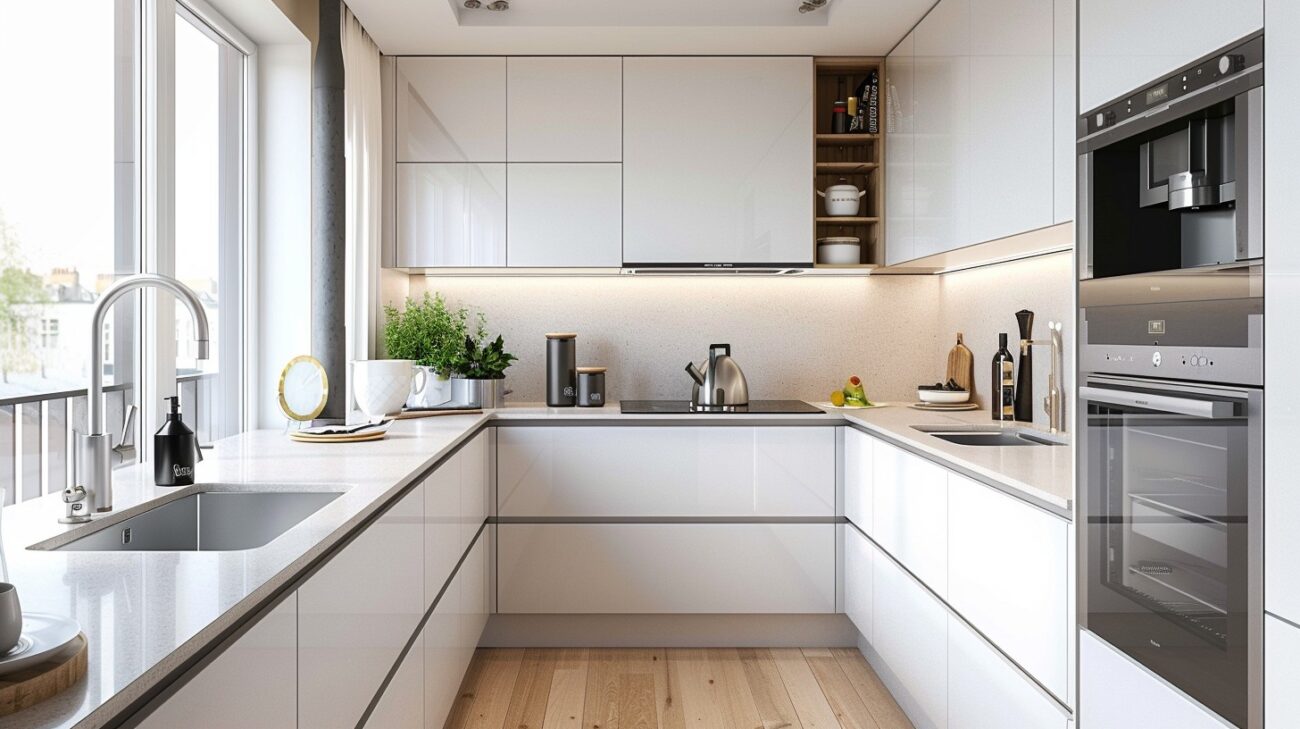
If you’ve been putting off cleaning behind your integrated kitchen appliances because you’re not entirely sure how to do it without pulling a cabinet door clean off its hinges, you’re in very good company. It’s one of those jobs that looks straightforward until you’re halfway through and something creaks ominously. The good news is that it absolutely can be done without incident – it simply requires a bit of preparation, a clear understanding of what you’re dealing with, and the willingness to go slowly. Method beats muscle every single time with integrated appliances.
Why Behind Your Integrated Appliances Is a Horror Story Waiting to Happen
The Usual Suspects: Grease, Dust, and Everything Else You’d Rather Not Think About
Let’s be honest about what actually lives behind an integrated fridge or dishwasher that hasn’t been moved in eighteen months. Grease vapour – carried on warm air from the hob – settles on every cool surface it can find, including the sides of appliances and the interior walls of the cabinet housing. Layer that with airborne dust, the odd crumb that migrated during a particularly enthusiastic cooking session, and the general detritus of daily kitchen life, and you’ve got a build-up that’s genuinely unpleasant to encounter.
Beyond the aesthetics, the stakes are real. Accumulated dust on a fridge compressor forces the motor to work harder, shortening the appliance’s lifespan. Grease and food debris are an open invitation for pests – particularly mice, which need very little encouragement to take up residence behind a warm refrigerator. In worse cases, dust collected around electrical components poses a legitimate fire risk. None of this is scaremongering; it’s simply what happens when those areas are left unattended for too long.
Before You Move Anything: The Groundwork That Prevents Costly Mistakes
Read the Room (and the Manual)
The single most skipped step in this entire process is checking the manufacturer’s guidance before touching anything. Most integrated appliances come with installation notes that explain exactly how the unit is mounted, whether it slides freely or is secured to the cabinet frame, and what kind of clearance it needs. If you no longer have the physical manual, the make and model printed on the inside door will get you the PDF in under a minute.
The other thing to establish before anything moves: is the appliance hardwired into the electrics, or does it plug in? A dishwasher, for instance, may have a plug socket hidden behind the kick plate under the cabinet. A built-in oven, on the other hand, is almost always hardwired. Knowing the difference matters enormously. Electricity and water supplies need to be properly isolated before you start pulling things out – this is non-negotiable, not optional.
Assessing Your Cabinet Surrounds Before You Pull Anything Out
Integrated appliances sit inside fitted cabinetry, and that cabinetry – particularly in older kitchens, or anywhere MDF or veneered finishes are involved – can be more fragile than it looks. Before you attempt to move anything, run your hands along the cabinet sides and check for any soft spots, swollen panels, or joints that have started to separate. Pay attention to the flooring inside the cabinet housing too: tiles can chip under the weight of a sliding appliance, and luxury vinyl will tear if something sharp catches it.
Check the hinge condition on the appliance door as well. Many integrated fridge and dishwasher doors are attached to the cabinet door via a door-on-door fixing system, and these hinges can be under considerable tension. Removing the cabinet door panel before pulling the unit out is often the wisest move, and the installation manual will tell you exactly how.
The Gentle Art of Moving Integrated Appliances (Without Wrecking Your Kitchen)
Fridges and Fridge-Freezers
Start by emptying the fridge completely and switching it off at the plug – or at the fuse spur if it’s wired directly. Give it a few minutes before moving it, partly out of courtesy to the compressor and partly because a running fridge is heavier than a still one feels.
Place a folded towel, a piece of cardboard, or a purpose-made appliance slide mat on the floor directly in front of the cabinet opening. This is your insurance policy against scratched tiles or gouged vinyl. Many integrated fridges have a small anti-tilt bracket screwed to the cabinet floor at the back – check for this before attempting to pull the unit forward, as forcing a bracketed fridge out is exactly how you split a cabinet base panel. Once the bracket is loosened, the fridge can usually be slid forward on its adjustable feet. You rarely need to pull it all the way out; clearing the back by thirty to forty centimetres is generally enough to access the compressor and clean the floor and walls behind it.
Dishwashers
A dishwasher requires a bit more ceremony because it’s plumbed in. Turn off the water supply – usually via the isolation valve under the kitchen sink – before disconnecting the inlet hose from the back of the machine. Have an old towel ready, because there will be residual water in the hose. The drainage hose, which typically loops up behind the unit and into the waste under the sink, can usually be left connected; just ensure it has enough slack to allow the dishwasher to slide forward without strain.
The area underneath a dishwasher cavity is particularly grim, and for a specific reason: the slight warmth, occasional humidity, and darkness create a microclimate that grease and food particles absolutely love. Focus attention here – the floor cavity, the side panels of the adjacent cabinets, and the base of the unit itself – using a flat mop head and a grease-cutting solution diluted appropriately for the surface.
Built-In Ovens and Hobs
This is the one that catches people out. Unlike fridges and dishwashers, a built-in oven is not designed to be slid out by the homeowner, full stop. It is hardwired, often load-bearing within its housing, and surrounded by materials that conduct heat differently depending on age. Attempting to pull a built-in oven out without the right expertise is how you damage the cavity liner, dislodge connections, or crack the fascia trim.
What you can clean safely is the accessible perimeter: the gap along each side of the oven door, the trim around the hob, and the side vents that extract heat from the cavity. A slim crevice tool on the vacuum handles loose debris, and a slightly damp microfibre cloth – never wet, never steam – can address grease on the exterior trim. Anything that requires going further than that is a job for a professional appliance engineer, not a cleaning session.
The Actual Cleaning – Products, Tools, and Techniques That Won’t Cause Damage
What to Use (and What to Absolutely Avoid)
The surfaces you’ll encounter behind integrated appliances are varied, and the wrong product on the wrong surface creates a second problem where you had one. Stainless steel side panels respond well to a diluted washing-up liquid solution followed by a dry microfibre buff; specialist stainless steel cleaners are fine but rarely necessary. Painted MDF cabinet interiors should be cleaned with a barely damp cloth – moisture causes MDF to swell, and you will not enjoy the consequences. Tiled floors behind appliances can take a more robust grease-cutting spray, but check that it’s safe for the grout as well as the tile.
Things to avoid without exception: abrasive scourers on any finished surface, undiluted bleach near metal fixings or on painted wood, and steam cleaners anywhere near the back of an electrical appliance. Steam and electrics are not friends, regardless of how confidently the steam cleaner’s marketing suggests otherwise.
Getting Into the Gaps Without the Drama
The right tools make a significant difference in the narrow, awkward spaces that characterise the area behind integrated appliances. A crevice attachment on the vacuum handles dry debris and dust colonies with minimal effort. For grease on flat surfaces, a microfibre cloth wrapped around a flat ruler or spatula gives you reach without force. For compressor vents on fridges – those horizontal fins at the back – a soft-bristled paintbrush dislodges dust without bending the fins, which are easy to damage and genuinely important to leave intact.
End of Tenancy Cleaning – Why This Area Gets Scrutinised More Than You Think
What Letting Agents and Landlords Are Actually Looking For
In London’s rental market, end of tenancy inventories have become increasingly thorough, and the areas behind integrated appliances are firmly on the checklist at most well-managed properties. Landlords and their agents have seen every variation of the “cleaned around but not behind” approach, and they know what genuine deep cleaning looks like versus a surface-level effort ahead of checkout.
Deposit deductions for neglected kitchen areas – particularly grease build-up behind appliances and debris on the floor cavities underneath – are among the most common disputes seen by deposit protection schemes. The argument that “it was like that when I moved in” rarely holds up against a thorough check-in inventory. If the property has integrated appliances, the expectation is that they will be returned in a condition that reflects proper cleaning throughout, not just the surfaces that are immediately visible.
Keeping It Clean Between Deep Cleans – A Maintenance Mindset
Simple Habits That Stop the Horror from Coming Back
The reason behind-appliance cleaning becomes such a formidable task is almost always the same: it’s been left too long. A build-up that takes two hours to address properly would have taken ten minutes to prevent, spread over several months of small, low-effort checks.
Every few months, pull the dishwasher out slightly and run a dry cloth along the floor cavity. After any significant cooking session involving deep frying or roasting, wipe down the side panels of the fridge if it’s adjacent to the hob. Keep a slim crevice attachment accessible and use it along the edges of appliance housings as part of a regular vacuum run. Check that fridge compressor vents are clear of dust twice a year – a soft brush and thirty seconds is all it takes.
None of these habits are demanding. What they do is ensure that the next time a proper deep clean is needed, it’s a measured, manageable job rather than an afternoon that tests both your patience and your cabinetry.
